

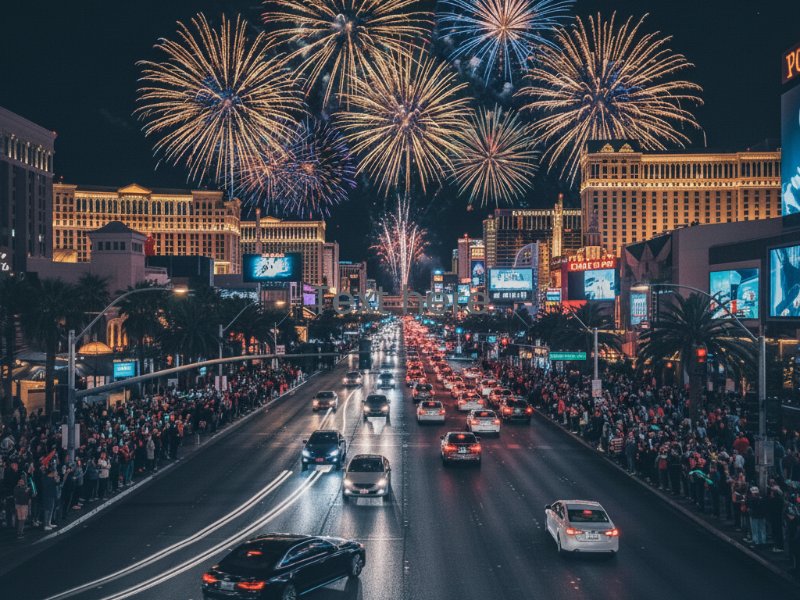
New Year’s Eve in Las Vegas looks like something out of a movie. Fireworks erupt over the Bellagio fountains. Champagne flows nonstop at rooftop lounges. Celebrity DJs count down to midnight inside packed nightclubs. The Strip turns into one massive street party with hundreds of thousands of people celebrating harder than anywhere else in the country
But here’s the part most visitors, and even locals, don’t think about.
While the city rings in the new year with its trademark spectacle, the roads become a completely different story. What feels like the biggest party in the world quickly turns into the most dangerous night to be behind the wheel. The same energy that makes Vegas the ultimate NYE destination also makes it one of the riskiest places to drive after midnight. And the numbers prove it.
New Year’s Day sees more DUI crashes than any other holiday in Las Vegas. It’s not a close race. According to a study performed by Valiente Mott Injury Attorneys, from 2018–2023, New Year’s Day recorded 91 DUI crashes, compared to 56 on Labor Day and 53 on July 4th.
Understanding why this happens and how to avoid being part of the statistic could genuinely save your life.
Why New Year’s Eve in Vegas Is Unlike Anywhere Else
In most cities, bars shut down at 2 AM, creating a natural stopping point that slows drinking whether people want it to or not. Vegas doesn’t have that. Casinos never close, bars don’t shut their doors, and if someone wants to keep drinking until sunrise, nothing stops them. That freedom is part of the appeal, but it also fuels hours of continuous alcohol consumption that spill into the early morning…exactly when DUI crashes spike.
Then add event density. New Year’s Eve packs the city with massive concerts, headliner DJ sets, arena shows, and hotel or casino parties, many of which end within the same hour. When tens of thousands of people hit the streets at once, rideshare prices surge three to five times higher allowing poor decisions to follow.
What Actually Happens When You Drive Drunk
Everyone knows drunk driving is dangerous. That’s not the issue. The problem is what happens after hours of drinking, celebrating, and telling yourself:
“My hotel is only 10 minutes away.”
“Ubers are ridiculous right now.”
“I’m fine.”
Alcohol doesn’t just impair your driving; it impairs your ability to judge whether you should be driving at all. In Nevada, a DUI can mean up to six months in jail, $400–$1,000 in fines, a license suspension, mandatory SR-22 insurance that triples your premiums, and $10,000–$20,000+ in total costs.
Compare that to a surge-priced Uber at around $150, a hotel room for $300–$500, or simply walking or asking a friend for help at no cost. The most expensive ride home is the one you try to drive yourself.
Your New Year’s Eve Survival Plan
Your survival plan is all about making sure you get home without wrecking your life or someone else’s. Before you head out, lock in your ride before your first drink. Pre-book rideshare if the app allows, plan to stay on the Strip if that’s where you’ll be partying, budget for surge pricing, and save taxi or shuttle numbers in your phone.
Avoid driving on Las Vegas Blvd, Flamingo, Sahara, and Charleston, as these corridors are high-risk every New Year’s. If you need to drive at some point during the night, try to avoid the 10 PM–4 AM window when congestion, impaired drivers, and post-event traffic are at their peak. You can still enjoy the full New Year’s experience, just plan your movements so you’re not on the road during the most chaotic hours.
During the night, follow a strict two-drink rule if you plan to drive later. Eat throughout the night, drink water between alcoholic drinks, and keep an eye on your group for warning signs. Speak up if someone goes for their keys.
If you want to skip the stress entirely, request rides away from Strip bottlenecks, use RTC’s free NYE transit if it’s running, take hotel shuttles between properties, or walk if you’re staying close. And if you really want to avoid the chaos, just book a room where you’re celebrating.
If You See Something, Say Something
Spotting a drunk driver could literally save a life. Watch for common warning signs like swerving, drifting between lanes, driving without headlights, or sudden speed changes. If you notice a driver showing any of these behaviors, call local police, provide the location, vehicle description, and direction of travel, and keep your distance.



No Comment